
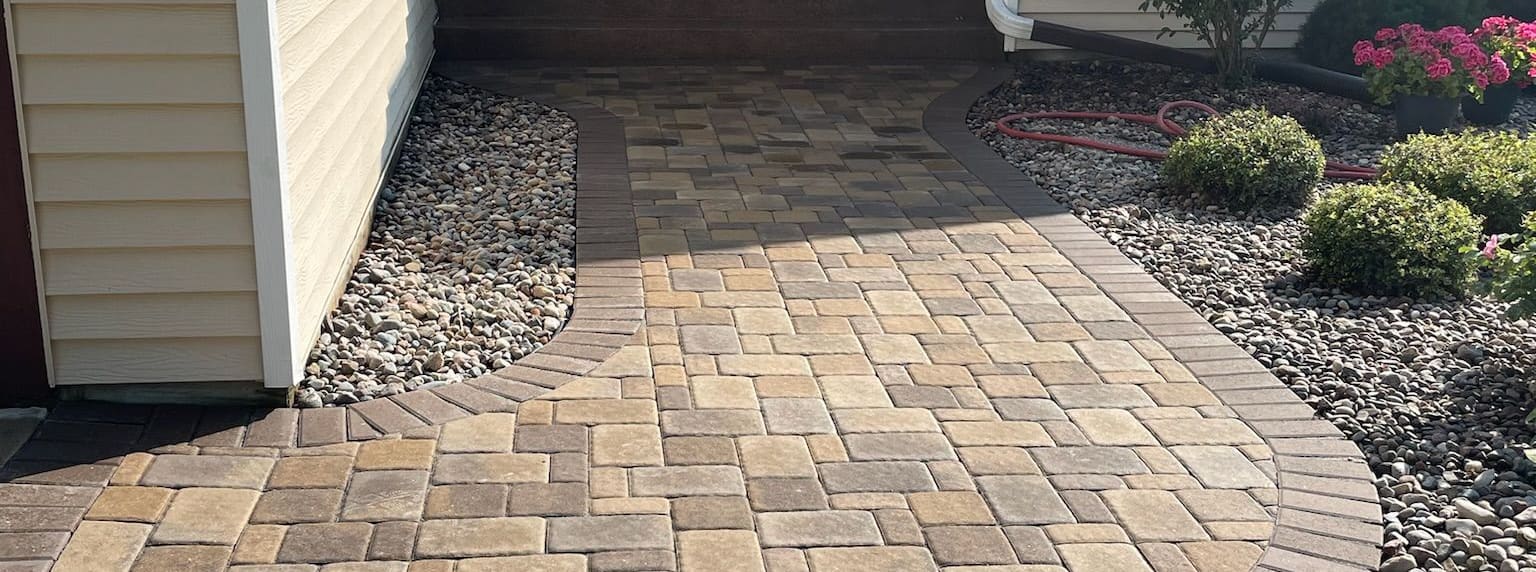

A patio changes how a property gets used, not just how it looks. Professionally installed Paver Patios in Rochester, NY give homeowners a durable, low-maintenance surface that complements a wide range of home styles, from Colonial homes to ranch-style houses. Homeowners choose paver patios for different reasons, whether they want a comfortable outdoor living space or hope to increase property value. Either way, how the patio holds up through Rochester winters comes down to material choice, design, and installation quality.
Why Are Paver Patios an Ideal Choice for Rochester Homes?
Rochester winters are hard on outdoor surfaces. Choosing the right patio material is especially important in Rochester because seasonal freeze-thaw cycles place significant stress on outdoor surfaces. Unlike poured concrete slabs, interlocking concrete pavers perform differently. Because the surface consists of individual pavers installed over a compacted base and bedding sand, it can accommodate minor ground movement without developing large cracks.
Key Benefits of Installing a Professionally Designed Patio
Professionally installed paver patios in Rochester provide both visual appeal and long-term durability. Their long-term value becomes evident through reduced maintenance requirements and reliable performance over many freeze-thaw seasons. Here are some key benefits of installing a professionally designed patio:
1. Outdoor Living Space: A place for dining, entertaining, cooking outdoors, or just sitting outside.
2. Property Value: A professionally installed patio enhances curb appeal, and in many cases, that shows up as a modest increase in what the property is worth on the market.
3. Drainage: Grading the site correctly before installation, along with proper base preparation, keeps rainwater moving away from the house instead of pooling on the surface.
4. Easy Upkeep: A paver patio needs periodic cleaning, and the joints will eventually need attention as the sand between them settles or washes out over time.
5. Choices: Pavers come in enough shapes, colors, textures, and laying patterns that most homeowners can match the patio to the existing style of the house.
6. Long-Term Value: A patio installed to the right specifications avoids the kind of settling, cracking, and joint failure that leads to costly repairs a few years down the line.
The Installation Process and Why Professional Expertise Matters
Proper installation is the single most important factor in a patio’s long-term performance. While installation costs vary depending on the paver style, site conditions, and project complexity, homeowners typically pay on a per-square-foot basis. A professionally installed patio generally includes a compacted aggregate base that is about 6 to 8 inches deep for residential applications, although the required depth may vary depending on soil conditions and expected loads. Patios built with the same materials can perform very differently depending on how the base is made.
The professional installation process usually consists of the following steps:
a. Assess the site and plan the project.
b. Dig the soil to the required depth.
c. Compact the aggregate material.
d. Lay the bedding sand.
e. Place the pavers according to the selected design.
f. Install the edge restraint around the project.
g. Install joint sand for stabilization of pavers.
h. Compact the entire surface to lock the pavers into place.
Paver Patio Maintenance Tips for Long-lasting Results
Regular maintenance helps keep your paver patio looking its best for years. Some of the key maintenance practices include:
a. Regular sweeping to avoid stains and accumulation.
b. Cleaning with proper products.
c. Removal of moss.
d. Replace broken or damaged pavers as needed.
e. Apply a sealer if recommended by the paver manufacturer.
f. Check drainage and edging occasionally to catch problems early.
Joint sand replenishment to secure pavers. Some patios use regular joint sand, while others use polymeric joint sand, which hardens when activated with water to help reduce weed growth and insect activity. The appropriate choice depends on the patio design and maintenance preferences.
Final Thoughts
A paver patio that is designed and built correctly tends to hold up quietly. The base stays solid, the surface stays flat, and it survives Rochester’s freeze-thaw cycles for well over a decade with minimal attention. That kind of result comes from the groundwork done before a single paver is set: proper compaction and a base suited to the site’s drainage. Homeowners who get that part right typically end up with a patio that needs little more than routine sweeping and an occasional refill of joint sand.